How Long Should a Real Estate Video Be? A Format-by-Format Guide
Choose a useful real estate video length based on the viewer, campaign job, property story, publishing destination, and next action.
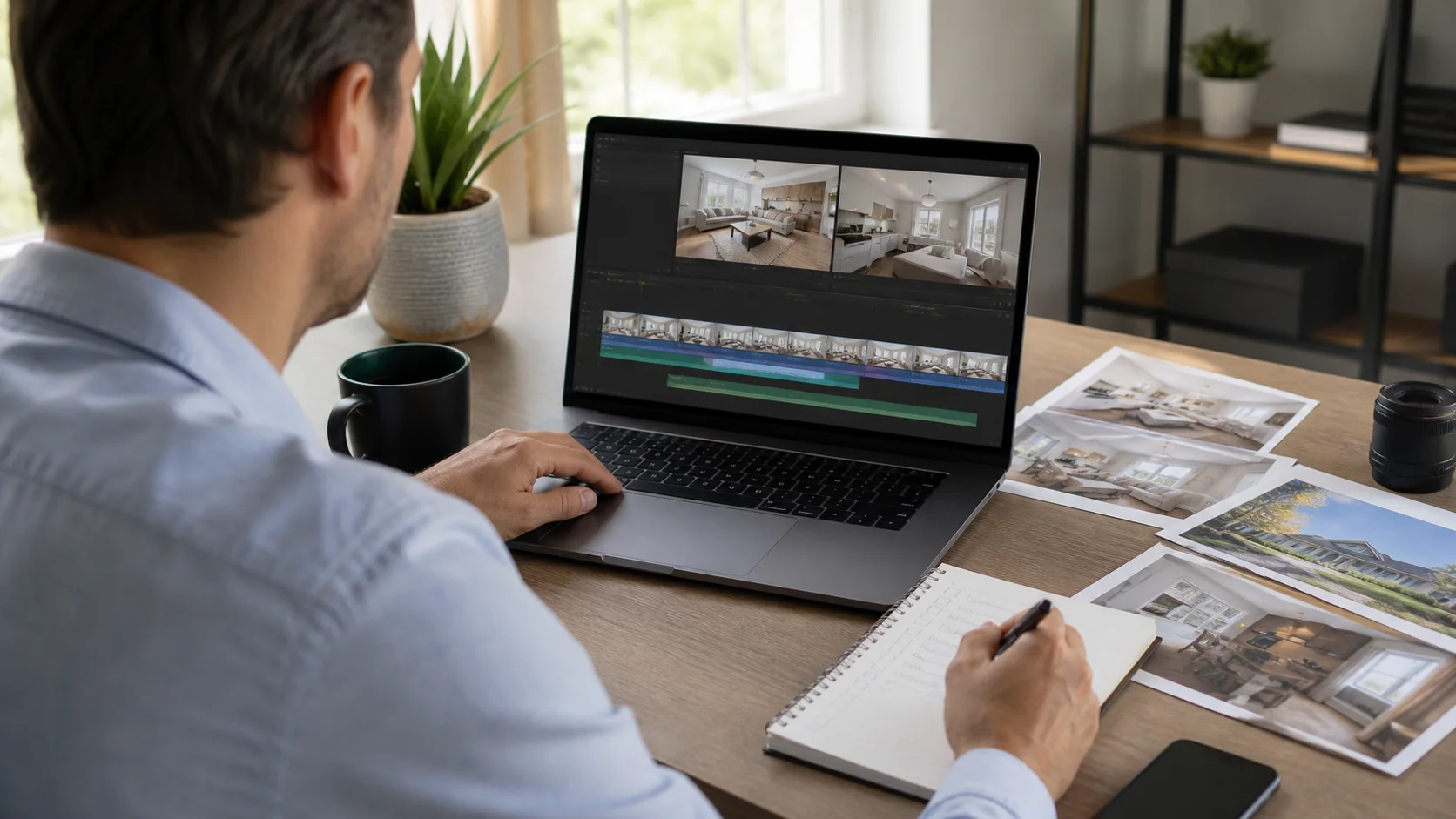
There is no single ideal runtime for every property video. A short listing teaser, a narrated property overview, an open-house reminder, and a seller-presentation example serve different viewers. The useful length is the shortest edit that communicates the promised property story without rushing important information.
Choose the job before choosing the runtime
Write one sentence describing what the viewer should understand or do after watching. Then count only the scenes needed to deliver that outcome. A video built to announce an open house can be brief; a complex luxury, commercial, or new-construction story may need a measured edit with more context.
A practical production sequence
- Define one audience, one campaign moment, and one next action before selecting scenes.
- Group approved photos into essential, supporting, and optional scenes so the core edit remains clear.
- Allow enough screen time for the viewer to understand each room and read any necessary caption.
- Cut repeated angles, generic transitions, and copy that simply narrates what is already obvious.
- Create a master edit first, then derive shorter versions with their own opening and ending.
What changes the appropriate length
- Property complexity: multiple structures, amenities, development phases, or commercial uses need more orientation.
- Viewer intent: active listing-page visitors tolerate more detail than people meeting the property in a feed.
- Narration: voiceover needs natural phrasing and visual evidence under every claim.
- Text density: price, event, access, or contact information must remain readable before the scene changes.
- Brand position: premium work often benefits from fewer scenes and calmer pacing, not simply a longer runtime.
Mistakes that weaken the result
- Stretching a weak image set to meet an arbitrary duration target.
- Compressing every listing fact into a fast edit that viewers cannot absorb.
- Posting the same cut everywhere without changing the hook, crop, or next action.
- Measuring success by completion rate without considering clicks, inquiries, or qualified viewing context.
Distribution and measurement
Track performance by version and campaign job. Compare completion and drop-off with the downstream action the video supports, such as listing-page visits, event responses, or showing requests. A shorter cut is not automatically better if it removes the information a qualified viewer needs.
Pre-publish review checklist
- The opening explains why this property or update deserves attention.
- Every included scene adds information rather than repeating a nearby angle.
- Important captions remain readable on a phone at normal playback speed.
- The ending gives one current, specific next action.
- Short derivatives still represent the property accurately after scenes are removed.
Turn the plan into an editable property video
Start with approved property photos or a supported listing URL, shape the story for this campaign, and review every scene before publishing.