Real Estate Video Production Workflow: Brief to Published Campaign
Follow a complete real estate video production workflow for briefing, sourcing, editing, review, delivery, publishing, measurement, and updates.
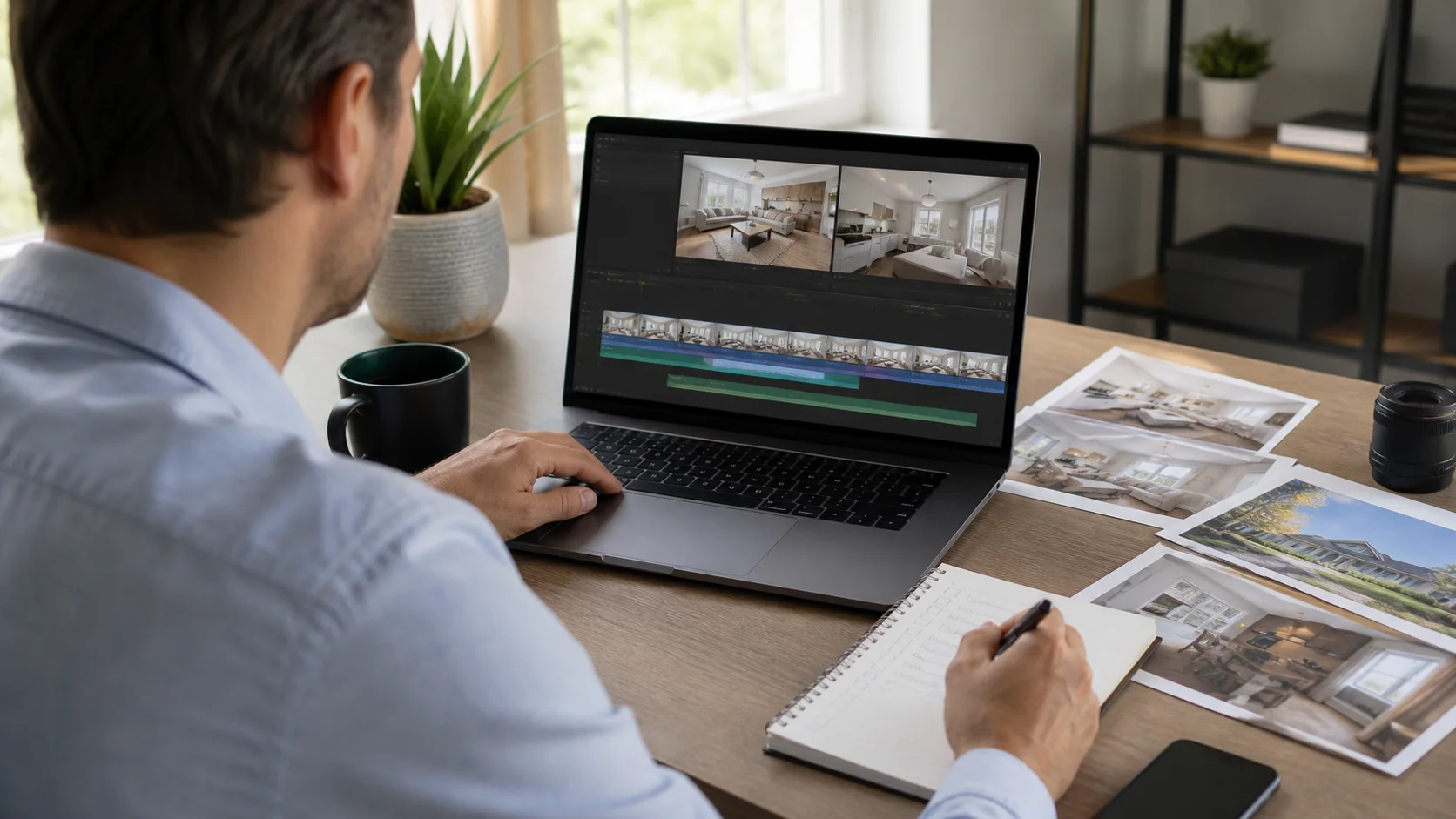
Reliable property video is a chain of decisions, not a single generation step. A clear workflow protects the property story from incomplete intake, wrong media, unsupported claims, inconsistent branding, rushed approval, and orphaned files after the campaign changes.
Define the outcome and owner at the start
The brief should name the audience, campaign moment, property position, required evidence, destination, deliverables, deadline, and next action. It should also identify who can approve property facts and who can approve the brand. A video without an owner for accuracy should remain a draft.
A practical production sequence
- Collect approved media, usage rights, current facts, brand assets, contact details, and destination requirements.
- Write the property promise and map each claim to a specific photo, clip, or verified source.
- Build the master sequence, direct motion, add restrained copy, and create the branded close.
- Review visuals, facts, audio, captions, crop safety, disclosures, links, and export quality in context.
- Publish approved versions, record their destinations, measure actions, and replace them when facts change.
Stage gates that prevent expensive rework
- Intake gate: production does not start until essential media, facts, rights, and owners are present.
- Story gate: stakeholders agree on audience, positioning, evidence, and next action before detailed editing.
- Quality gate: every generated or transformed scene is compared with its source at full size.
- Approval gate: the factual and brand reviewers approve the actual export, not an earlier draft.
- Publishing gate: file, caption, thumbnail, link, destination, and withdrawal plan all match.
Mistakes that weaken the result
- Beginning the edit before the campaign objective and source permissions are clear.
- Requesting broad feedback from many reviewers without defining decision ownership.
- Approving a timeline preview but failing to review the final rendered file.
- Publishing without recording where time-sensitive versions must later be updated or removed.
Distribution and measurement
Connect production records to campaign records. Note which master produced each derivative, where it was published, what action it supports, and when it needs review. This makes reporting more credible and turns one approved property project into an asset that can be updated safely.
Pre-publish review checklist
- The brief, property evidence, deliverables, and approvers are complete.
- Every claim shown or spoken can be traced to a current approved source.
- The final render has been checked for visual, audio, caption, and export errors.
- The correct version is paired with the correct channel copy and destination link.
- The campaign has an owner for measurement, updates, and withdrawal.
Turn the plan into an editable property video
Start with approved property photos or a supported listing URL, shape the story for this campaign, and review every scene before publishing.