Relocation Real Estate Video: Help Remote Clients Understand the Property
Create relocation property videos with stronger layout, condition, access, local orientation, question capture, and remote-review context.
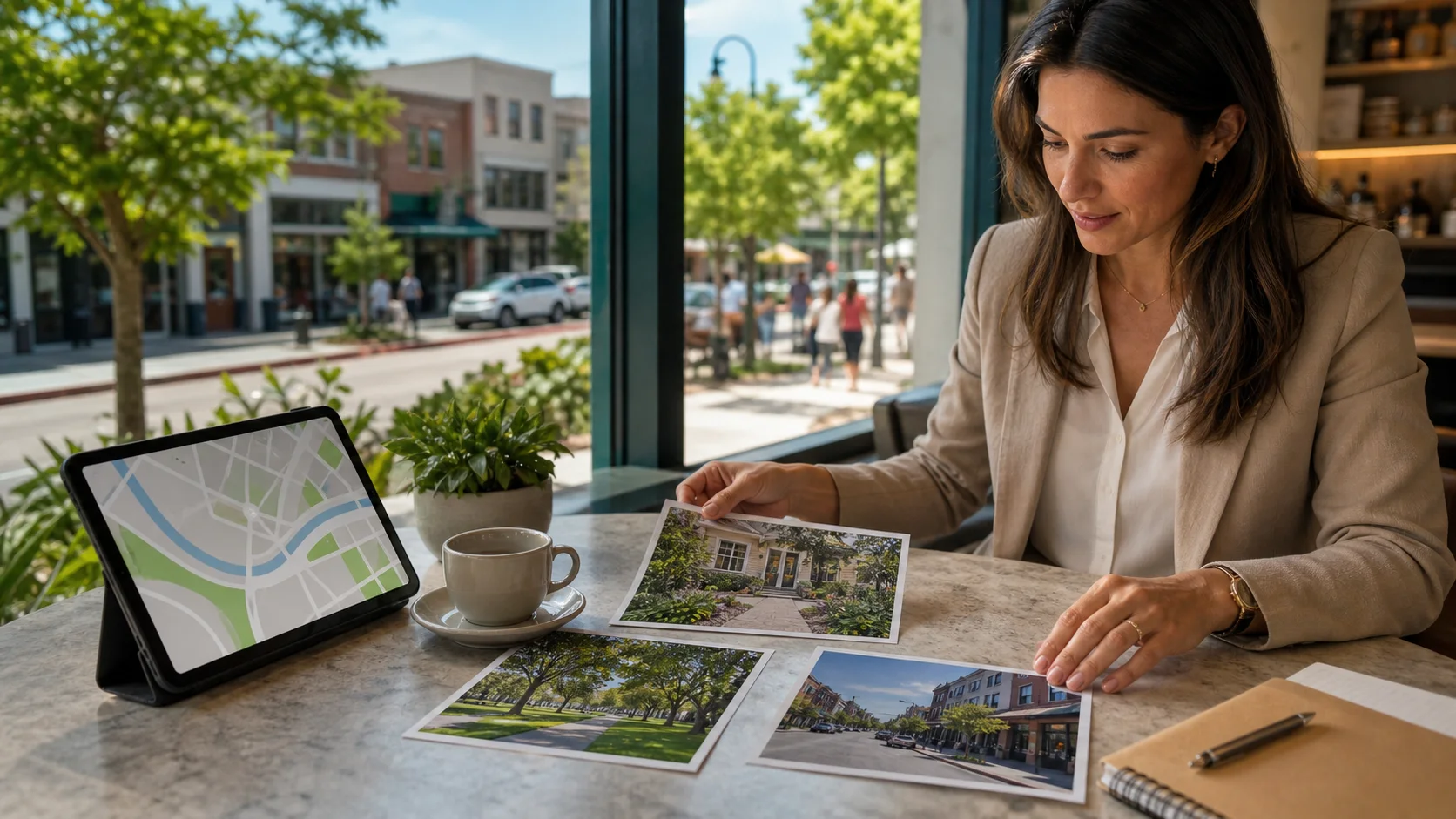
Relocating clients may evaluate properties before they can visit in person. A useful video needs more than the strongest rooms. It should explain arrival, layout connections, condition evidence, practical features, outdoor areas, access, and neutral location context while making the limits of remote viewing clear.
Build the video around remote uncertainty
Ask what the remote viewer cannot verify from the listing gallery: room connections, stairs, storage, noise context, natural light at the filming time, exterior approach, parking, outdoor relationship, current condition, or feature operation. Include evidence without turning the video into an inspection or guarantee.
A practical production sequence
- Collect the current listing, approved client questions, media rights, access permission, and information boundary.
- Plan a stable sequence from arrival through every relevant level, room connection, utility, and exterior area.
- Record or select practical evidence, then label what is observed, stated by the source, or still unverified.
- Add neutral local orientation, accurate captions, and a clear route for follow-up questions and documents.
- Review privacy, occupancy, access, claims, source date, and remote-viewing limitations before sharing.
Details that improve a remote review
- Approach and access: street-to-entry sequence, parking context, stairs, elevators, and shared circulation where permitted.
- Layout: wide orientation before detail, plus transitions that show how important spaces connect.
- Condition: current visible surfaces and systems without implying a professional inspection.
- Practical use: storage, work area, outdoor space, service area, light, and views as observed.
- Location: factual routes and official sources without demographic, safety, school-quality, or preference claims.
Mistakes that weaken the result
- Creating only a cinematic highlight reel when the client needs practical property evidence.
- Hiding difficult transitions, stairs, access, neighboring context, condition, or space limitations.
- Making statements about safety, schools, neighbors, suitability, or future conditions.
- Sharing access, occupancy, seller, tenant, document, or client information outside the intended audience.
Distribution and measurement
Use an appropriate private sharing path for client-specific material and a separate public marketing edit when needed. Record the media date and unanswered questions. Treat the video as preparation for further verification, not as a replacement for inspection, documents, advice, or an in-person visit.
Pre-publish review checklist
- The sequence answers the approved remote-viewing questions with current visual evidence.
- Layout, scale, condition, access, sound context, light, view, and limitations are not distorted.
- Client, seller, tenant, occupancy, document, and access privacy are protected.
- Local context uses neutral sourced wording and appropriate professional boundaries.
- The viewer has a clear follow-up path for verification and unanswered questions.
Turn the plan into an editable property video
Start with approved property photos or a supported listing URL, shape the story for this campaign, and review every scene before publishing.